01+
Data Quality
- Manual in-store data collection was inconsistent and error-prone
- Low-quality training data degraded model performance across product categories
Field-deployed capture and labeling workflows for retail robotics — built with and for non-technical field teams across hundreds of store locations
Field-deployed tooling
hundreds of store locations
iOS + Android
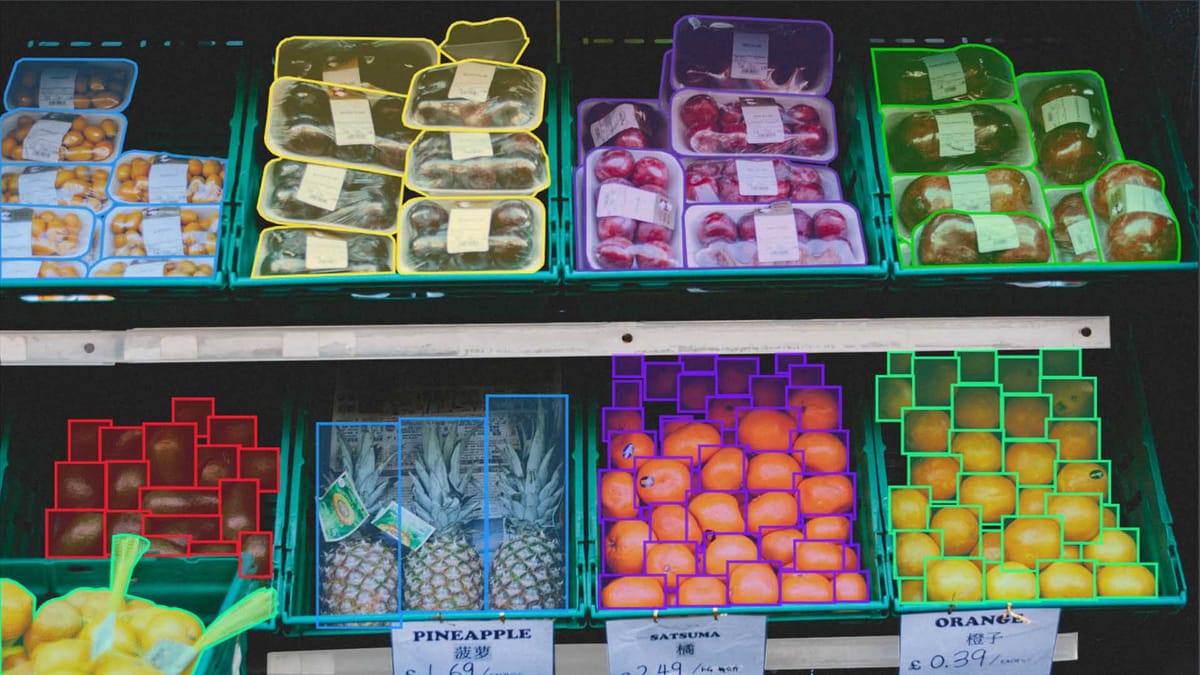
Bossa Nova Robotics deployed autonomous shelf-scanning robots across major national retail chains. As Lead Mobile Developer, I built and scaled cross-platform React Native + EAS applications that enabled field teams to capture, label, and upload shelf imagery — accelerating dataset generation and improving model training efficiency for the company's computer vision pipeline.
Training retail product detection models required massive volumes of high-quality labeled imagery captured in real stores — but the existing data collection process couldn't keep up.
In-store image capture, barcode scanning, and multi-select labeling
Reliable batch upload of .jpeg + .json annotation data from field devices
Centralized storage for millions of labeled shelf images and metadata
Labeled data feeds product detection model training and validation
Trained models deployed to autonomous shelf-scanning robots in stores
In-store image capture, barcode scanning, and multi-select labeling
Reliable batch upload of .jpeg + .json annotation data from field devices
Centralized storage for millions of labeled shelf images and metadata
Labeled data feeds product detection model training and validation
Trained models deployed to autonomous shelf-scanning robots in stores
Build a cross-platform camera interface for field teams to photograph retail shelf products directly in-store, with consistent quality and metadata tagging across iOS and Android devices.
Implement UPC barcode scanning to automatically identify and label products, reducing manual effort and improving dataset accuracy for model training.
Enable field teams to mark and label multiple products within a single image through an intuitive touch interface, generating structured annotation data for the computer vision pipeline.
Build a reliable upload service for field workers to push image and annotation data (.jpeg + .json) directly from their devices to Google Cloud Storage while on-site at retail locations.
Product demo
Equipped 100+ field workers across U.S. retail stores to capture high-quality training data at scale — on the order of a million dataset operations over the platform's lifetime. The part I owned was pipeline throughput: standardized capture and automated labeling replaced manual handoffs between field teams and data science, accelerating how quickly new products entered the model. Cleaner, more consistent training data contributed to a 25% improvement in product-recognition accuracy downstream — the model was the data science team's, but its inputs were the tooling I built.
Tools that feed AI pipelines live or die on field conditions — unreliable connectivity, bad lighting, and users who will never read a manual. The data-quality requirements that mattered came from sitting between data science and the operations teams doing the capturing, not from a spec. It was my first taste of forward-deployed work, before I had a name for it.